Jayanagar 3rd Block East Bangalore-560011, Karnataka India

Insurance Case Study India: Tractor Accident: Court Orders Insurance Payout
Insurance Case Study India: Tractor Accident: Court Orders Insurance Payout
A motor insurance claim can become complicated when the person injured or killed in an accident was travelling in a manner that was not covered under the vehicle's insurance policy.
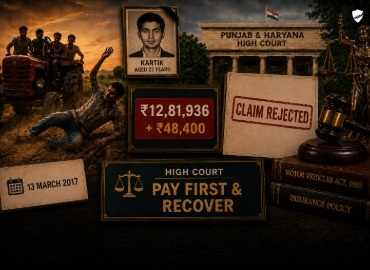
This case involved Kartik, a young man aged about 23 years, who was travelling on the bonnet of an agricultural tractor. An accident occurred, causing him to fall from the tractor and sustain serious injuries. He later died during treatment.
His father and siblings filed a motor accident compensation claim against the tractor's driver, owner and insurance company. The insurer, however, argued that Kartik was travelling as an unauthorised gratuitous passenger and that his risk was not covered under the insurance policy.
The case ultimately raised an important question: If the insurance policy does not cover the passenger, can the insurer still be ordered to pay the compensation?
The Tractor Accident Led to a Fatal Motor Insurance Claim
The accident occurred on 13 March 2017 when several people were travelling on a tractor. According to the claim, the tractor was being driven rashly and negligently when the accident occurred.
Kartik, aged approximately 23 years, was travelling on the bonnet of the tractor. He fell from the vehicle, sustained serious injuries and was taken for medical treatment. Unfortunately, he later died from his injuries.
His father and two siblings subsequently approached the Motor Accident Claims Tribunal seeking compensation from the tractor driver, owner and insurer.
The Tribunal considered the circumstances of the accident and awarded compensation to the claimants.
However, the motor insurance claim dispute did not end there. The insurer challenged its liability on the ground that the deceased was not a passenger whose risk was covered under the tractor insurance policy.
The 23-Year-Old Was Travelling as a Gratuitous Passenger
One of the most important aspects of the case was Kartik's status as a gratuitous passenger.
A gratuitous passenger is generally someone who is travelling in a vehicle without being carried for hire or reward and whose risk may not necessarily be covered under the applicable insurance policy.
In this case, Kartik was travelling on the bonnet of an agricultural tractor.
This became particularly important because a tractor is primarily intended for agricultural purposes and its insurance coverage does not automatically extend to every person travelling on it.
The insurer therefore argued that Kartik was an unauthorised gratuitous passenger and that the insurance company could not be contractually required to indemnify the vehicle owner for his death.
The issue illustrates why vehicle owners should understand not only whether their vehicle is insured, but also who and what the insurance policy actually covers.
The Insurer Disputed Liability Under the Tractor Policy
The insurer maintained that the tractor passenger insurance coverage did not extend to Kartik.
The Court agreed that the deceased was travelling as a gratuitous passenger and that his risk was not contractually covered under the tractor's insurance policy.
This distinction is important in motor insurance.
Simply because a vehicle has an active insurance policy does not mean that every accident, passenger or circumstance is automatically covered. Coverage depends on factors such as the type of policy, permitted use of the vehicle, persons covered and specific policy terms and conditions.
Therefore, although the family was entitled to pursue compensation for Kartik's death, the insurer established that it did not have a contractual obligation to ultimately bear the liability for an unauthorised gratuitous passenger.
However, this did not mean that the insurer could simply walk away from the compensation award.
The Court Applied the Pay-and-Recover Principle
The Court applied the important pay-and-recover principle.
Under this mechanism, an insurance company may be directed to pay the compensation awarded to accident victims or their dependants first and then recover that amount from the vehicle owner or other responsible party when the insurer establishes that the risk was not contractually covered.
In this case, although the insurer was not ultimately liable to indemnify the gratuitous passenger risk, the Court directed it to satisfy the compensation award first.
The insurer was then given the right to recover the amount from the tractor owner and driver.
The Court also considered the compensation awarded to Kartik's family and enhanced it by ₹48,400 towards filial consortium for his father.
The decision therefore balanced two separate issues: ensuring that the victim's family received the compensation awarded to them while recognising that the insurer should not ultimately bear a risk outside its contractual coverage.
What This Insurance Case Study Teaches Policyholders
This insurance claims case study demonstrates that having motor insurance does not automatically mean every possible liability connected with the insured vehicle is covered.
Vehicle owners should understand the permitted use of their vehicle and whether passengers are authorised and covered under their insurance policy.
The case also demonstrates the significance of the pay-and-recover principle in motor accident compensation disputes. Courts may, depending on the facts and applicable law, require an insurer to satisfy an award first so that victims or their families are not left waiting for compensation, while allowing the insurer to subsequently recover the money from the responsible vehicle owner or driver.
For vehicle owners, this creates an important financial risk. A person may have motor insurance and still ultimately become personally responsible for compensation when the vehicle is used contrary to policy conditions or when the particular risk falls outside the insurance coverage.
The key lesson is simple: being insured and being adequately covered are not always the same thing.
Conclusion
Motor insurance claim disputes can become complicated when an accident involves a passenger who is not covered under the terms of the vehicle's insurance policy.
In this case, a 23-year-old man was travelling on the bonnet of an agricultural tractor when an accident occurred. He fell from the tractor, suffered serious injuries and later died during treatment. His father and siblings subsequently sought compensation from the driver, vehicle owner and insurer.
The insurer argued that the deceased was travelling as an unauthorised gratuitous passenger and that his risk was therefore not contractually covered under the tractor's insurance policy. The Court accepted the insurer's coverage objection but applied the pay-and-recover principle.
Under this approach, the insurer was required to pay the compensation to the claimants first and was then permitted to recover that amount from the vehicle owner and driver.
This insurance case study highlights an important distinction between insurance policy coverage and the protection available to accident victims through motor accident compensation law. Even where an insurer establishes that a particular risk was outside the contractual coverage, courts may, depending on the applicable law and circumstances, direct the insurer to satisfy the award first and recover the amount from the responsible parties.
For vehicle owners, the case is also an important reminder that carrying passengers contrary to the permitted use or policy conditions can create significant financial liability.
If you are unsure about your motor insurance coverage, passenger liability, policy conditions or an insurance claim dispute, professional guidance can help you understand your coverage before an accident creates an unexpected financial burden. Contact us today or visit BasketOption.insure, the leading insurance brokers in Bangalore, for your policy, claims review, and expert advisory services. Visit https://basketoption.insure/ or get in touch with our experts today to explore insurance plans that truly care about your needs.
Latest Posts







Our Experts


Frequently Asked Questions
?What was the tractor accident insurance case about?
The case involved a 23-year-old man who was travelling on the bonnet of an agricultural tractor when an accident occurred. He fell from the tractor, sustained serious injuries and later died during treatment. His father and siblings subsequently sought compensation.
?Why did the insurer dispute the motor insurance claim?
The insurer argued that the deceased was travelling as a gratuitous passenger and that his risk was not contractually covered under the tractor's insurance policy.
?What is a gratuitous passenger?
A gratuitous passenger is generally a person travelling in a vehicle without being carried for hire or reward and whose risk may not necessarily be covered under the applicable motor insurance policy.
?Was the insurance company held contractually liable for the passenger?
The Court accepted that the insurer was not contractually liable to indemnify the risk associated with the gratuitous passenger.
?Why was the insurer still ordered to pay compensation?
The Court applied the pay-and-recover principle. This required the insurer to pay the compensation to the claimants first while allowing it to subsequently recover the amount from the tractor owner and driver.
?What does "pay and recover" mean in motor insurance?
Pay and recover is a legal mechanism under which an insurer may be directed to satisfy a compensation award first even where it establishes a policy or coverage defence. The insurer can then recover the amount from the responsible vehicle owner or other liable party.
?Can passengers travel on an agricultural tractor?
Whether passengers are permitted and insured depends on the vehicle's authorised use, applicable law and insurance coverage. Carrying unauthorised passengers can create significant safety and financial liability issues.
?Does every motor insurance policy breach result in pay and recover?
No. The application of the pay-and-recover principle depends on the facts of the accident, nature of the policy or coverage issue, applicable law and relevant judicial precedents.
?What should vehicle owners learn from this case?
Vehicle owners should understand their policy's passenger coverage, follow the vehicle's authorised use and comply with insurance conditions. Otherwise, they may ultimately become financially responsible for compensation even when an insurer initially satisfies the award.
?What is the key takeaway from this insurance case study?
Having motor insurance does not mean every risk involving the vehicle is automatically covered. Vehicle owners should understand the scope of their insurance and ensure that their vehicle is used according to applicable policy conditions.