Jayanagar 3rd Block East Bangalore-560011, Karnataka India

Insurance Case Study India: ₹4.5 Crore Fake Insurance Call Centre Scam
Insurance Case Study India: ₹4.5 Crore Fake Insurance Call Centre Scam
An insurance fraud can become far more convincing when fraudsters already possess personal information about the people they are targeting.
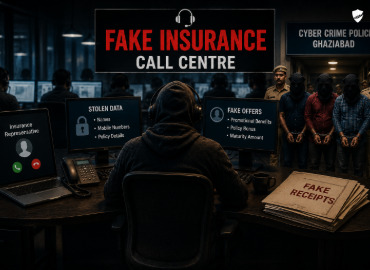
In this case, Ghaziabad Police uncovered an alleged fake insurance call centre racket that reportedly targeted more than 1,500 people across India and generated approximately ₹4.5 crore through fraudulent activities.
According to police, two of the main accused had previously worked at a call centre in Noida and allegedly stole customer data. This information was then reportedly used to contact policyholders and approach them with fake promotional insurance offers.
The case demonstrates how a combination of insurance customer data theft, fake insurance documents and fraudulent phone calls can make an insurance scam appear genuine.
The ₹4.5 Crore Fake Insurance Scam Targeted 1,500+ People
The alleged insurance scam in India reportedly operated through a fake insurance policy setup that targeted existing policyholders.
According to police, the accused contacted potential victims and presented them with attractive promotional insurance offers. Because the callers allegedly possessed customer information, their calls could appear more credible to the people being targeted.
The racket allegedly reached more than 1,500 people across the country and generated approximately ₹4.5 crore.
Rather than relying only on random calls, the alleged operation demonstrates how access to existing customer information can make an insurance scam call considerably more convincing.
For consumers, this creates an important warning: simply because a caller knows your name or certain insurance-related information does not mean the caller is genuinely associated with an insurer or authorised insurance intermediary.
Former Call Centre Employees Allegedly Stole Customer Data
One of the most concerning aspects of this insurance fraud case study was the alleged misuse of customer information.
Police said two of the main suspects had previously worked at a Noida call centre. They allegedly stole customer data and later used that information to identify and contact potential victims.
Access to such information can provide fraudsters with an advantage because a conversation containing familiar personal or insurance details can appear legitimate.
This is why insurance customer data theft can become an important part of organised fraud.
Consumers should therefore avoid treating knowledge of their policy or personal information as proof that a caller is genuine.
Instead, when receiving an unexpected insurance call, consumers should independently contact the insurer or intermediary through verified official channels before taking any action.
Fake Offers and Insurance Documents Made the Scam Convincing
The alleged operation did not end with telephone calls.
Police said victims were approached with fake promotional insurance offers. After payments were received, the accused allegedly used specialised software to generate counterfeit insurance receipts.
These fake insurance documents could potentially make victims believe that their transaction had been completed legitimately.
The accused were also alleged to have used mule bank accounts and pre-activated SIM cards obtained using fake identities as part of the operation.
Together, these methods created several layers of apparent legitimacy: customer information made the call convincing, promotional offers encouraged payments and counterfeit receipts made the transaction appear genuine.
This highlights why consumers should not verify an insurance transaction solely through a receipt or document supplied by the person requesting payment.
Insurance policies, receipts and payment details should instead be independently verified through the insurer or authorised intermediary.
Police Uncovered the Insurance Fraud and Arrested Seven
The alleged fake insurance policy fraud eventually came under police investigation.
Ghaziabad Police arrested seven people in connection with the racket, while another suspect was reported to be absconding.
According to the investigation reported in the case, the alleged network involved stolen customer information, fraudulent insurance offers, counterfeit receipts, mule accounts and SIM cards obtained through fake identities.
The scale of the alleged operation—more than 1,500 potential victims and approximately ₹4.5 crore in fraudulent proceeds—demonstrates how organised insurance scams can operate across multiple locations rather than targeting only a small group of people.
The case also shows how insurance telecalling scams can evolve beyond simple unsolicited calls into organised operations supported by data, technology and financial networks.
What This Insurance Fraud Case Study Teaches Consumers
The biggest lesson from this insurance fraud case study is simple: information is not proof of identity.
A caller knowing your name, policy details or other personal information does not automatically mean the caller represents your insurance company.
Consumers should be particularly careful when an unsolicited caller:
Before making an insurance-related payment, consumers should independently verify the caller, company, policy and payment channel.
If there is any doubt, contact the insurer or authorised insurance intermediary directly through verified contact details.
The safest principle is straightforward: verify first, pay later.
Conclusion
Insurance fraud becomes significantly more convincing when fraudsters already possess information about the people they are targeting.
In this case, police said a fake insurance policy racket targeted more than 1,500 people across India and generated approximately ₹4.5 crore through fraudulent activity. Two of the prime suspects had previously worked at a Noida call centre and allegedly used customer data to contact policyholders with fake promotional insurance offers.
After victims made payments, the accused allegedly generated counterfeit insurance receipts using specialised software. Police also alleged that mule bank accounts and pre-activated SIM cards obtained using fake identities were used to facilitate the operation.
Seven people were arrested in connection with the alleged racket, while another suspect was reported to be absconding.
This insurance fraud case study highlights an important risk for consumers: a caller knowing your name, insurance details or other personal information does not automatically prove that the caller is genuine.
Consumers should independently verify unexpected insurance calls, offers and payment requests through official channels before sharing information or transferring money. Insurance documents and receipts should also be verified rather than accepted solely because they appear professional.
Protecting yourself from insurance fraud therefore requires more than protecting your policy. It also requires protecting your personal information and verifying who you are dealing with.
If you receive a suspicious insurance call, are unsure about the authenticity of an insurance offer, or need professional assistance reviewing your existing insurance policies, seek verification before making any payment or sharing sensitive information.
Contact us today or visit BasketOption.insure, the leading insurance brokers in Bangalore, for your policy, claims review, and expert advisory services. Visit https://basketoption.insure/ or get in touch with our experts today to explore insurance plans that truly care about your needs.
Latest Posts











Our Experts


Frequently Asked Questions
?What was the ₹4.5 crore insurance scam about?
According to police, the case involved a fake insurance policy racket that allegedly targeted more than 1,500 people across India and generated approximately ₹4.5 crore through fraudulent activity.
?How did the accused allegedly obtain customer information?
Police said two of the prime suspects had previously worked at a Noida call centre and allegedly stole customer data that was later used to contact potential victims.
?How were people allegedly targeted?
The suspects allegedly contacted policyholders using available customer information and presented them with fake promotional insurance offers.
?How were fake insurance documents created?
According to police, counterfeit insurance receipts were allegedly generated using specialised software after victims made payments.
?How many people were allegedly targeted in the scam?
The reported racket allegedly targeted more than 1,500 people across India.
?How much money was allegedly generated through the insurance scam?
Police estimated that approximately ₹4.5 crore was generated through the alleged fraudulent operation.
?How many people were arrested?
Police arrested seven people in connection with the alleged fake insurance racket. Another suspect was reported to be absconding.
?How can consumers identify a suspicious insurance call?
Warning signs can include unsolicited promotional offers, pressure to make immediate payments, requests for sensitive information, unfamiliar payment accounts and insurance documents that cannot be independently verified.
?Does knowing my insurance details prove that a caller is genuine?
No. A caller's knowledge of your personal or insurance information should not be considered proof of authenticity. Consumers should independently verify the caller through official channels.
?What is the biggest lesson from this insurance fraud case study?
Verify before you trust or pay. Even professional-looking documents and callers who possess personal information can potentially be part of a fraudulent operation.