Jayanagar 3rd Block East Bangalore-560011, Karnataka India

Insurance Case Study: Bank Held Responsible
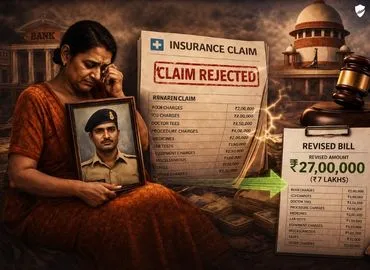
Insurance Case Study: Bank Held Responsible
A customer reportedly believed that valid insurance protection existed through a bank-linked arrangement — until disaster struck and the insurance claim was allegedly denied.
What followed became a major legal dispute involving banking negligence, insurance servicing obligations, and consumer rights. Courts and consumer forums in India have repeatedly examined whether banks can escape liability when their actions or omissions contribute to insurance claim rejection or financial loss suffered by customers.
Bank Allegedly Denied Insurance Responsibility After the Loss
According to reports from several consumer disputes involving bank-linked insurance arrangements, customers often discover problems only after filing a claim. In many such cases, policyholders allegedly believed that insurance coverage had already been properly arranged by the bank.
The dispute in this insurance case study reportedly began after a financial loss or insured event occurred, the customer approached the insurer for compensation, questions emerged regarding policy issuance, renewal, or premium handling, and the bank allegedly denied responsibility for the insurance lapse or rejection.
Customers in banking-linked insurance arrangements often rely heavily on loan-linked insurance schemes, ATM or account-linked accident covers, hypothecation insurance arrangements, and premium deductions handled through banks.
However, consumer forums have repeatedly examined whether banks fulfilled their obligations properly when facilitating such insurance coverage.
Policyholder Claimed the Bank Failed to Secure Proper Insurance Cover
The customer reportedly argued that the bank failed to ensure valid insurance protection despite representations, premium handling, or linked banking services.
The allegations reportedly included:
Consumer forums have repeatedly observed that negligence in banking services may amount to "deficiency in service" under consumer protection law when customers suffer financial loss.
The dispute reportedly intensified after the insurer refused to honor the claim, allegedly leaving the customer without compensation despite believing valid protection existed.
Insurance Claim Dispute Raised Questions About Banking Negligence
As the matter reportedly escalated legally, major questions arose regarding the role and responsibility of the bank.
The dispute reportedly focused on:
In one recent consumer commission matter, Axis Bank was reportedly directed to compensate the nominee of a deceased account holder after the bank allegedly failed to forward complete documents for an accidental insurance cover linked to an ATM card.
Consumer forums have repeatedly emphasized that banks handling insurance-linked services cannot act carelessly where customers depend on them for financial protection.
Court Examined Bank Liability, Insurance Obligations, and Consumer Rights
During judicial scrutiny, courts and consumer forums generally examine several critical factors in such disputes:
Consumer authorities also examine banking records, policy documents, premium receipts, communication exchanged with customers, claim processing timelines, and conduct of both bank and insurer.
In several cases, consumer forums have refused to allow banks to completely escape responsibility merely by shifting blame to insurance companies.
The dispute reportedly reinforced that customers are entitled to fair, transparent, and responsible handling of banking-linked insurance services.
What This Insurance Case Study Reveals About Bank and Insurance Responsibility
This insurance case study highlights several important lessons for consumers dealing with bank-linked insurance products.
| # | Key Lesson | What It Means |
|---|---|---|
| 1 | Always Verify Insurance Policy Issuance | Customers should independently verify whether valid coverage actually exists. |
| 2 | Preserve Banking and Insurance Records Carefully | Premium receipts, emails, SMS alerts, and policy copies may become critical evidence. |
| 3 | Banks Can Face Liability for Negligence | Consumer forums repeatedly examine whether banking service deficiencies contributed to customer loss. |
| 4 | Insurance Claim Rejections Can Be Challenged | Consumers may approach bank grievance departments, insurance grievance cells, the Insurance Ombudsman, consumer forums, or civil courts. |
| 5 | Linked Insurance Products Require Extra Attention | Customers should not assume that loan-linked or account-linked insurance automatically remains active forever. |
Conclusion
Bank-linked insurance disputes can create serious financial hardship when customers believe valid insurance protection existed but later face claim denial due to negligence, documentation failures, or improper servicing. Courts and consumer forums have repeatedly emphasized that banks cannot avoid responsibility where their actions, omissions, or service deficiencies contribute to wrongful insurance claim disputes.
Customers should carefully verify policy issuance, preserve all banking and insurance records, and challenge unfair claim denials through proper legal remedies when necessary.
Stay updated with the best insurance case studies in India. Follow BasketOption.insure for real case studies, claim insights, policy reviews, and expert insurance advisory services. Visit https://basketoption.insure/ or get in touch with our experts today to explore insurance plans that truly care about your needs.
Latest Posts













Our Experts


Frequently Asked Questions
?What is a bank insurance liability case?
A bank insurance liability case arises when a customer alleges that a bank's negligence, documentation failure, incorrect policy handling, or service deficiency caused denial of insurance benefits or financial loss.
?Can banks be held responsible in insurance claim disputes?
Yes. Consumer forums and courts in India have repeatedly examined whether banks can be held liable where their negligence or improper handling contributed to insurance claim rejection or customer loss.
?Why do disputes arise between banks and insurance companies?
Disputes may arise due to failure to issue or renew insurance coverage, incorrect documentation or premium handling, delayed forwarding of claim documents, miscommunication regarding policy coverage, negligence in linked insurance services, or liability disputes between banks and insurers.
?What is deficiency in banking service in insurance disputes?
Deficiency in service refers to unfair, negligent, delayed, or improper handling of banking or insurance-related services that causes financial loss or inconvenience to consumers.
?What documents are important in bank insurance disputes?
Important documents include loan agreements and banking records, insurance policy documents, premium payment receipts, claim forms and correspondence, bank statements, and emails, notices, and policy communications.
?Can policyholders legally challenge wrongful insurance claim rejection?
Yes. Policyholders may approach bank grievance cells, insurance grievance departments, the Insurance Ombudsman, consumer forums, or civil courts if they believe the rejection resulted from negligence or unfair conduct.
?What factors do courts examine in bank-related insurance disputes?
Courts generally examine whether valid insurance coverage existed, conduct of the bank and insurer, policy wording and obligations, whether premiums were properly handled, documentary evidence submitted, and whether negligence or service deficiency caused the loss.
?What lessons does this insurance case study teach consumers?
This case highlights the importance of verifying insurance policy issuance carefully, preserving premium and banking records, reviewing insurance coverage periodically, understanding linked banking-insurance services, and challenging wrongful claim denial when necessary.
?Can banks and insurers both be held liable together?
Yes. In some cases, consumer forums have examined joint liability where both the bank and insurer allegedly contributed to claim denial, delayed processing, or service deficiencies.
?Why are bank insurance dispute case studies important?
These case studies help consumers understand banking negligence risks, insurance servicing obligations, consumer rights, claim handling responsibilities, and how courts interpret liability between banks and insurers.