Jayanagar 3rd Block East Bangalore-560011, Karnataka India

Insurance Case Study India: 14 Killed in Truck Crash: Insurer Told to Pay First
Insurance Case Study India: 14 Killed in Truck Crash: Insurer Told to Pay First
What happens when passengers travel in a goods vehicle even though the insurance policy does not cover them—and a fatal accident occurs? Can the insurance company refuse to compensate the victims completely?
A Gujarat High Court case involving a goods truck and 14 deaths examined this issue through the pay and recover principle in motor insurance.
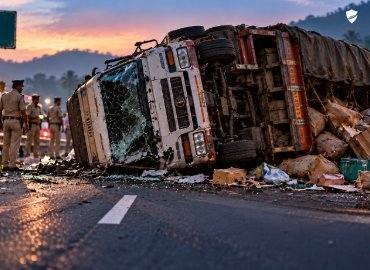
On August 24, 2010, a truck was travelling from Kadavali towards Valiya. The deceased was travelling in the truck along with goods when the driver allegedly lost control of the vehicle. The truck overturned on the side of the road. The accident resulted in the deaths of 14 people.
A major insurance dispute followed because the deceased persons travelling in the truck were treated as unauthorized or gratuitous passengers. Carrying passengers in the goods vehicle was contrary to the terms of the insurance policy.
However, the Gujarat High Court considered the interests of the third-party claimants and applied the principle of pay and recover.
The insurer was directed to satisfy the compensation award first and was then permitted to recover the amount from the owner and driver of the vehicle.
The case demonstrates an important distinction between an insurer's contractual liability under a policy and protection available to third-party motor accident victims.
A Goods Truck Accident Resulted in 14 Deaths
The accident occurred on August 24, 2010, at approximately 12:45 p.m. The truck, bearing registration number GJ-16-V-5244, was travelling from Kadavali towards Valiya.
According to the case record, goods belonging to the deceased had been loaded into the truck, and the deceased was travelling in the vehicle.
When the truck reached the Valiya-Vadi road near Kadavali village, the driver allegedly drove at excessive speed and lost control of the steering. The truck overturned on the side of the road.
The consequences were devastating. The deceased suffered fatal injuries, and a total of 14 people died in the accident.
Compensation proceedings followed. However, the presence of passengers inside a vehicle insured as a goods vehicle created an important insurance issue.
Why Did the Insurance Company Dispute Liability?
The central problem concerned how the people travelling in the truck were classified. The Court recorded that the deceased were travelling as unauthorized or gratuitous passengers.
This was significant because the vehicle was a goods truck. An insurance policy covering a goods vehicle does not automatically mean that every person travelling inside that vehicle is covered as an insured passenger.
Using the goods vehicle for carrying unauthorized passengers constituted a breach of the applicable policy conditions.
This gave rise to an important question:
If the insurer has a valid policy defence against the vehicle owner, should innocent third-party claimants be forced to recover compensation directly from the owner?
The Gujarat High Court considered previous decisions dealing with this issue.
Rather than making the victims bear the immediate consequences of the policy breach, the Court considered whether the insurer should pay the compensation first and then recover it from the parties responsible for the breach.
Why the Court Applied the Pay and Recover Principle
The pay and recover principle plays an important role in certain motor accident compensation disputes.
Under this approach, an insurer may have a valid defence because the insured vehicle was being used in breach of policy conditions. However, instead of leaving third-party claimants to pursue the vehicle owner directly, the court can direct the insurance company to satisfy the compensation award first.
The insurer is then permitted to recover that amount from the vehicle owner or other responsible party.
In this case, the Gujarat High Court relied on previous judicial decisions concerning third-party victims and gratuitous passengers.
The Court observed that although the goods vehicle had been used to carry passengers contrary to the policy conditions, the claimants were third parties. The victims should not be made to suffer because of the policy breach between the insured and insurer.
The Court therefore applied the pay and recover principle.
This did not mean that the vehicle owner's breach disappeared. Instead, it changed who had to compensate the claimants first. The insurer had to satisfy the award and could subsequently recover the amount from the owner and driver.
Insurer Told to Pay the Compensation First
The Gujarat High Court modified the liability position by applying the pay and recover mechanism.
The insurance company was directed to satisfy the compensation award in the first instance. After making the payment, it was granted the right to recover the amount from the owner and driver of the vehicle.
This distinction is important. The decision did not necessarily mean that the insurer was ultimately responsible for bearing the financial consequences of the policy breach.
Rather, the insurer was required to ensure that the third-party claimants received the compensation awarded to them. Recovery against the owner and driver could follow afterward.
The judgment relied on principles discussed in earlier cases such as Shamanna v. Oriental Insurance Co. Ltd. and Manuara Khatun v. Rajesh Kr. Singh, which addressed situations where insurers were directed to pay third-party victims before recovering the amount from the insured.
For motor accident victims, this mechanism can be significant because recovering a substantial compensation amount directly from an individual vehicle owner may be difficult.
The pay and recover principle seeks to prevent eligible third-party claimants from being left without effective compensation merely because the insured breached a policy condition.
What This Motor Insurance Case Teaches Vehicle Owners
The first lesson is straightforward: a goods vehicle should not be used to carry unauthorized passengers.
An insurance policy is issued according to the permitted use and risk associated with the vehicle. Using a commercial goods vehicle in a manner inconsistent with its policy terms can create serious insurance consequences.
Second, having an insurance policy does not mean every use of the vehicle is automatically covered. Vehicle owners should understand restrictions concerning permitted use, passenger carriage, driver requirements and other important policy conditions.
Third, the pay and recover principle should not be misunderstood as protection for the vehicle owner. If a court directs the insurer to compensate victims first, the insurer may subsequently recover that money from the owner or driver. The owner could therefore still face significant financial liability.
Finally, the case highlights the special position of third-party victims in motor insurance law. A policy dispute between an insurer and vehicle owner should not automatically deprive innocent third parties of compensation where the applicable legal principles permit a pay and recover direction.
Conclusion
The goods truck accident involving 14 deaths demonstrates how motor insurance liability can become complicated when a vehicle is used in breach of its policy conditions.
The truck overturned after its driver lost control, resulting in a devastating accident in which 14 people died. The deceased were treated as unauthorized or gratuitous passengers travelling in a goods vehicle, creating a breach of the insurance policy conditions.
However, the Gujarat High Court focused on the position of the third-party claimants. Rather than requiring them to recover compensation directly from the vehicle owner, the Court applied the pay and recover principle.
The insurance company was directed to satisfy the compensation award first and was then permitted to recover that amount from the owner and driver.
The case provides an important lesson for vehicle owners:
An insurer paying a third-party claim first does not necessarily mean the policy breach has been ignored. The insurer may still recover the compensation from the vehicle owner afterward.
Understanding how a commercial vehicle can legally be used—and ensuring that its use remains consistent with the insurance policy—is therefore critical.
Commercial vehicle insurance involves more than simply keeping an active policy.
Permitted vehicle use, passenger restrictions, driver requirements and other policy conditions can significantly affect insurance liability after an accident. Reviewing these conditions before a claim occurs can help businesses and vehicle owners understand potential coverage gaps.
Contact us today or visit BasketOption.insure, the leading insurance brokers in Bangalore, for your policy, claims review, and expert advisory services. Visit https://basketoption.insure/ or get in touch with our experts today to explore insurance plans that truly care about your needs.
Latest Posts



Our Experts


Frequently Asked Questions
?What happened in the goods truck accident?
A goods truck travelling from Kadavali towards Valiya overturned after the driver lost control of the vehicle. The accident resulted in 14 deaths.
?When did the accident occur?
The accident occurred on August 24, 2010, at approximately 12:45 p.m.
?Why did insurance liability become an issue?
The deceased persons were treated as unauthorized or gratuitous passengers travelling in a goods vehicle, which created a breach of the insurance policy conditions.
?What is the pay and recover principle in motor insurance?
It is a mechanism under which an insurer may be directed to compensate third-party claimants first and then recover the amount from the vehicle owner or other responsible party where an applicable policy breach has been established.
?Did the Court ignore the policy breach?
No. The policy breach remained relevant. The insurer was allowed to recover the compensation amount from the owner and driver after satisfying the award.
?Why was the insurer required to pay first?
The Court considered the position of the third-party claimants and applied previous judicial principles supporting pay and recover in the circumstances of the case.
?Can passengers legally travel in every goods vehicle?
No. Goods vehicles are subject to statutory, permit and insurance restrictions regarding their permitted use and carriage of passengers.
?Does pay and recover mean the vehicle owner has no liability?
No. The insurer may satisfy the compensation award first but can subsequently recover the amount from the owner or driver where permitted by the court's order.
?Why is this case important for commercial vehicle owners?
It demonstrates that using a commercial vehicle contrary to its permitted or insured use can expose the owner to significant financial consequences even when an insurer initially pays third-party compensation.
?What should commercial vehicle owners check in their insurance policies?
They should understand permitted vehicle use, passenger restrictions, driver requirements, coverage limits, exclusions and other policy conditions relevant to their operations.