Jayanagar 3rd Block East Bangalore-560011, Karnataka India

Insurance Case Study India: ₹82 Lakh Fatal Crash Claim: Supreme Court Ruling
Insurance Case Study India: ₹82 Lakh Fatal Crash Claim: Supreme Court Ruling
Can the driver of a stationary vehicle be held responsible for a fatal road accident? A Supreme Court case involving a truck parked on a dark road shows why the answer can be yes.
The case arose from a fatal accident in Delhi involving 20-year-old Akash Kumar, who was pursuing CA Final and undergoing articleship.
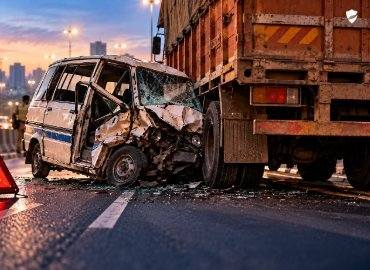
At around 3 a.m., Akash was travelling in a Wagon-R driven by his roommate when the car collided with a stationary truck. The truck had been left on the road without parking lights, indicators, reflectors or other warning signs. Akash suffered fatal injuries.
His parents sought compensation under the Motor Vehicles Act. The Motor Accident Claims Tribunal eventually awarded ₹81.21 lakh, but the dispute continued through the Delhi High Court and ultimately reached the Supreme Court.
The Supreme Court upheld the finding of negligence against the truck driver, dismissed the insurer's appeal and enhanced the total compensation to ₹82.01 lakh.
The case provides an important lesson about motor accident compensation claims, negligence involving stationary vehicles and the calculation of compensation for young victims with promising professional careers.
A Stationary Truck Led to a Fatal Road Accident
The accident occurred in the early hours of June 11, 2013. Akash Kumar was travelling in a Wagon-R driven by his roommate, Nikhil Kumar Jain.
At approximately 3 a.m., near Andrews Ganj Bus Stop on Delhi's BRT Corridor, the car collided with a truck that had been stationed on the road.
According to the evidence accepted by the courts, the truck had no parking lights, indicators, reflectors or cautionary signs. The darkness and absence of warning measures made the stationary vehicle a serious hazard.
Akash suffered fatal injuries, while his roommate was also injured. His parents subsequently pursued compensation under the Motor Vehicles Act.
The truck driver and owner argued that the vehicle had suffered punctures in its rear tyres and had been parked on the extreme left side of the road. However, neither the driver nor the owner entered the witness box to substantiate that version.
The Motor Accident Claims Tribunal ultimately found the truck driver's conduct negligent.
Why the Stationary Truck Driver Was Held Negligent
One of the most important issues was whether the driver of the Wagon-R should also be blamed because the car had collided with the truck from behind.
The Supreme Court rejected the idea that a rear-end collision automatically proves negligence by the approaching vehicle. Instead, negligence had to be examined according to the complete circumstances of the accident.
The Court considered the testimony of Nikhil Kumar Jain, who had survived the accident and was an eyewitness. His evidence established that the truck had been left on the road without adequate warning measures.
The accident also occurred at approximately 3 a.m., making the lack of lights, reflectors and cautionary signs particularly significant.
The truck driver and owner did not provide evidence supporting their claim that the vehicle had been properly parked after suffering tyre punctures.
The Supreme Court therefore agreed with the Tribunal and Delhi High Court that the stationary truck created a road hazard and that the truck driver's negligence was the proximate cause of the accident.
The insurer's argument alleging contributory negligence by the Wagon-R driver was not accepted.
How the Tribunal Calculated ₹81.21 Lakh Compensation
The amount of compensation became another major issue.
Akash was only 20 years old. He had not yet qualified as a Chartered Accountant but was pursuing CA Final and undergoing articleship with a professional firm. His actual stipend varied from approximately ₹3,595 to ₹14,410 per month.
However, the Tribunal did not restrict its assessment entirely to his stipend. Evidence was presented regarding the professional prospects and earning potential of qualified Chartered Accountants.
Considering Akash's educational achievements, professional trajectory and the fact that he had reached the final stage of his CA studies, the Tribunal assessed his monthly income at ₹55,500.
After accounting for income tax, future prospects, personal expenses and the applicable multiplier, the Tribunal calculated loss of dependency at ₹80,91,900. It also awarded ₹15,000 for loss of estate and ₹15,000 for funeral expenses.
The total compensation therefore came to ₹81,21,900, together with 9% annual interest from the institution of the Detailed Accident Report.
The insurer challenged both the finding of negligence and the compensation amount. Akash's parents, meanwhile, sought further enhancement.
Supreme Court Enhanced Compensation to ₹82.01 Lakh
The Delhi High Court had previously upheld the Tribunal's award. When the dispute reached the Supreme Court, the insurer again challenged the finding of negligence and the quantum of compensation.
The Supreme Court found no reason to interfere with the concurrent finding that the truck driver was negligent. It also declined to reduce the compensation calculated on the basis of Akash's future professional prospects.
However, the Court identified one component that had been omitted.
Akash was unmarried, and his parents were entitled to compensation for filial consortium following the principles applicable to compensation under conventional heads.
The Supreme Court therefore awarded ₹40,000 to each parent. This added ₹80,000 to the existing award.
As a result, the total compensation increased from ₹81,21,900 to ₹82,01,900, together with the interest already awarded.
The insurer's appeal was dismissed, while the parents' appeal was partly allowed to this limited extent.
What This Motor Accident Compensation Case Teaches
This case demonstrates that a stationary vehicle can still create legal liability. Leaving a large vehicle on a road at night without adequate lights, reflectors, indicators or warning signs can pose a serious danger to other road users.
The case also shows that a rear-end collision does not automatically establish negligence by the vehicle approaching from behind. Courts can consider road conditions, visibility, warning measures, eyewitness testimony and other evidence when determining responsibility.
Another important lesson concerns compensation for young victims. A person may not yet be earning their expected professional salary at the time of an accident.
However, educational qualifications, professional progress and credible evidence about future earning potential can become relevant when courts determine just compensation.
Finally, motor accident compensation is not limited to loss of dependency. Depending on the circumstances and applicable legal principles, compensation can also include conventional heads such as loss of estate, funeral expenses and consortium.
Conclusion
The ₹82.01 lakh motor accident compensation case demonstrates why negligence cannot be determined simply by looking at which vehicle hit the other.
Akash Kumar was travelling in a Wagon-R when it collided with a truck stationed on the road at approximately 3 a.m. The evidence showed that the truck had been left without parking lights, indicators, reflectors or cautionary signs.
Although the insurer argued that the Wagon-R driver was responsible, the Tribunal, Delhi High Court and Supreme Court did not accept that position.
The Supreme Court upheld the finding that the truck driver's failure to take adequate precautions was the proximate cause of the accident.
It also maintained the ₹81.21 lakh compensation calculated by the Tribunal and added ₹80,000 for filial consortium, taking the total to ₹82,01,900.
The case reinforces an important principle:
A stationary vehicle can still create a serious road hazard—and responsibility depends on the complete circumstances of the accident, not merely on which vehicle made contact.
Motor accident claims can involve complex questions about negligence, insurance liability, income, future earning potential and compensation.
If you are dealing with a motor insurance claim or reviewing your existing vehicle insurance, understanding your policy and documentation before a dispute occurs can make a significant difference.
Contact us today or visit BasketOption.insure, the leading insurance brokers in Bangalore, for your policy, claims review, and expert advisory services. Visit https://basketoption.insure/ or get in touch with our experts today to explore insurance plans that truly care about your needs.
Latest Posts









Our Experts


Frequently Asked Questions
?What was the stationary truck accident case about?
The case involved the death of 20-year-old Akash Kumar after the Wagon-R in which he was travelling collided with a stationary truck in Delhi.
?Why was the stationary truck driver held negligent?
Evidence showed that the truck had been stationed on the road at night without parking lights, indicators, reflectors or cautionary signs.
?Does hitting a stationary vehicle from behind automatically make the other driver negligent?
No. The Supreme Court held that a rear-end collision by itself does not automatically establish negligence. The complete circumstances and available evidence must be considered.
?What did the insurer argue?
The insurer challenged the finding of negligence against the truck driver and also questioned the amount of compensation awarded.
?How much compensation did the Motor Accident Claims Tribunal award?
The Tribunal awarded ₹81,21,900 along with 9% annual interest from the date of institution of the Detailed Accident Report.
?Why was the deceased's future earning potential important?
Akash was a CA Final student undergoing articleship. The Tribunal considered his educational and professional trajectory while assessing the income used for compensation.
?What monthly income did the Tribunal use?
The Tribunal assessed monthly income at ₹55,500 after considering the evidence relating to Akash's future professional prospects.
?Why did the Supreme Court increase the compensation?
The Court found that compensation for filial consortium had been omitted and awarded ₹40,000 to each parent.
?What was the final compensation amount?
The Supreme Court increased the total compensation from ₹81,21,900 to ₹82,01,900, along with the applicable interest.
?What is the main lesson from this motor accident case?
A stationary vehicle can create liability if it is left on the road without adequate safety precautions. Courts examine the complete circumstances and evidence when deciding negligence and compensation.