Jayanagar 3rd Block East Bangalore-560011, Karnataka India

Insurance Case Study in India: Multi-Crore Fire Insurance Claim Rejected as Fraudulent
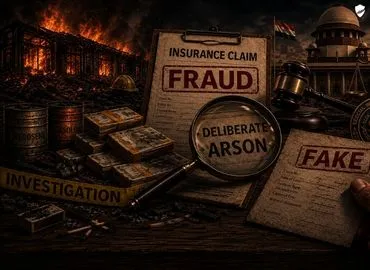
Insurance Case Study in India
Fire insurance exists to protect businesses from unexpected losses, but what happens when investigators conclude that the fire itself was deliberately engineered? This insurance case study examines a multi-crore fire insurance dispute where a massive claim eventually collapsed after courts found evidence suggesting the incident was not accidental. The case demonstrates how forensic investigations, survey reports, financial records, and policyholder conduct can play a decisive role in determining whether a fire insurance claim is genuine or fraudulent.
A Multi-Crore Fire Insurance Claim Triggered Serious Fraud Allegations
The dispute arose after a devastating fire caused substantial damage to insured property and stock. The policyholder submitted a claim running into crores, asserting that the fire had caused extensive losses covered under the fire insurance policies.
Initially, the claim appeared similar to many large commercial fire losses. However, during the investigation process, several aspects of the claim attracted scrutiny from the insurer and investigators.
Questions began to emerge regarding the timing of insurance coverage enhancements, the stock allegedly stored at the premises, and the circumstances surrounding the fire itself.
Insurer Allegedly Claimed the Fire Was Deliberately Staged
The insurer disputed the claim and argued that the fire was not accidental. According to the investigation, evidence suggested that the incident may have been deliberately caused rather than resulting from an electrical fault or unforeseen accident.
The insurer relied upon forensic findings, survey reports, and other investigative material to support its position. Investigators reportedly found circumstances that raised serious concerns regarding the authenticity of the claim and the events leading to the fire. The Supreme Court later noted that the insurer's investigation revealed evidence pointing towards deliberate arson and manipulation of records.
As a result, the insurer repudiated the claim, leading to a prolonged legal battle.
Investigation Findings Raised Questions About the Cause of the Fire
The investigation became the most critical aspect of the dispute.
According to the findings placed before the courts:
Court Examined Evidence, Motive, and the Validity of the Insurance Claim
When the dispute reached the highest judicial level, the court undertook a detailed review of the evidence.
The court examined:
The earlier award of partial compensation was set aside, the claim was rejected entirely, and the insurer was absolved of liability. The court also directed further investigation into the alleged fraud.
What This Insurance Case Study Reveals About Fraudulent Fire Claims
This insurance case study highlights an important principle of insurance law: genuine losses are compensable, but fraudulent claims receive no protection.
Fire insurance investigations often extend beyond the physical damage itself. Insurers and courts may scrutinize stock records, supplier invoices, financial transactions, forensic evidence, and policyholder conduct before deciding whether a claim is payable.
For businesses, the case serves as a reminder that transparency, accurate documentation, and compliance with policy conditions are essential. For insurers, it reinforces the importance of thorough investigations when circumstances surrounding a loss appear suspicious.
Conclusion
Fire insurance protects businesses and property owners against unexpected losses, but insurers are entitled to investigate suspicious claims where fraud, arson, or deliberate acts are suspected. Courts have repeatedly emphasized that insurance contracts operate on the principle of utmost good faith, and any claim founded on fraud or staged incidents can be completely rejected.
The Supreme Court recently reaffirmed that once fraud is established, no compensation can be granted, regardless of the extent of the loss.
Contact us today or visit BasketOption.insure, the leading insurance brokers in Bangalore, for your policy, claims review, and expert advisory services. Visit https://basketoption.insure/ or get in touch with our experts today to explore insurance plans that truly care about your needs.
Latest Posts




Our Experts


Frequently Asked Questions
Understand fire insurance fraud. Know policyholder obligations. Stay protected.
?What is a fire insurance fraud case?
A fire insurance fraud case arises when an insurer alleges that a fire loss was deliberately caused, exaggerated, or manipulated to obtain insurance benefits unlawfully.
?Can insurers reject fire insurance claims due to suspected fraud?
Yes. Insurers may reject claims if investigations reveal evidence suggesting arson, fabricated losses, manipulated records, or other fraudulent activities. However, fraud must generally be supported by credible evidence and investigation findings.
?What is an arson insurance claim dispute?
An arson insurance claim dispute occurs when the insurer alleges that the fire was intentionally set, while the policyholder maintains that the incident was accidental and covered under the policy.
?What evidence is examined in fire insurance fraud investigations?
Important evidence may include forensic fire investigation reports, surveyor reports, fire brigade records, police investigation records, CCTV footage, financial records, stock registers and invoices, and witness statements.
?Can a fire claim be rejected if fraud is proven?
Yes. Courts have repeatedly held that fraud vitiates the entire claim. Once fraud is established, the insurer may repudiate the claim completely.
?What factors do courts examine in fire insurance fraud disputes?
Courts generally examine the cause and origin of the fire, forensic and scientific evidence, motive and financial circumstances, authenticity of records and invoices, policy terms and conditions, and conduct of the insured and insurer.
?What is a staged fire insurance case?
A staged fire insurance case involves allegations that a fire was deliberately planned or caused to create an insurance claim and obtain compensation fraudulently.
?Can policyholders challenge fire claim rejection?
Yes. Policyholders may approach grievance forums, the Insurance Ombudsman, consumer forums, or courts if they believe the rejection was unfair.
?What lessons does this insurance case study teach businesses?
This case highlights the importance of maintaining genuine business records, preserving stock and inventory documentation, cooperating with investigations, understanding policy obligations, and avoiding any misrepresentation during claim submission.
?Why are fire insurance fraud case studies important?
These case studies help businesses understand fire claim investigations, fraud detection methods, insurer obligations, evidentiary requirements, and how courts evaluate allegations of arson, staged incidents, and fraudulent insurance claims.